Philippe Starck
"Working with Emeco has allowed me to use a recycled material and transform it into something that never needs to be discarded - a tireless and unbreakable chair to use and enjoy for a lifetime."
Emeco and Gregg Buchbinder's collaboration with Philippe Starck told by Jaye Buchbinder
It's third grade, and we are walking down the streets of New York – heading to meet with French designer, Philippe Starck. My dad is explaining to me that we are going to need to kiss both cheeks, as he is French. A homeless man jumps off the street exclaiming "I'll teach you how to kiss!" This emblazoned the day in my memory.
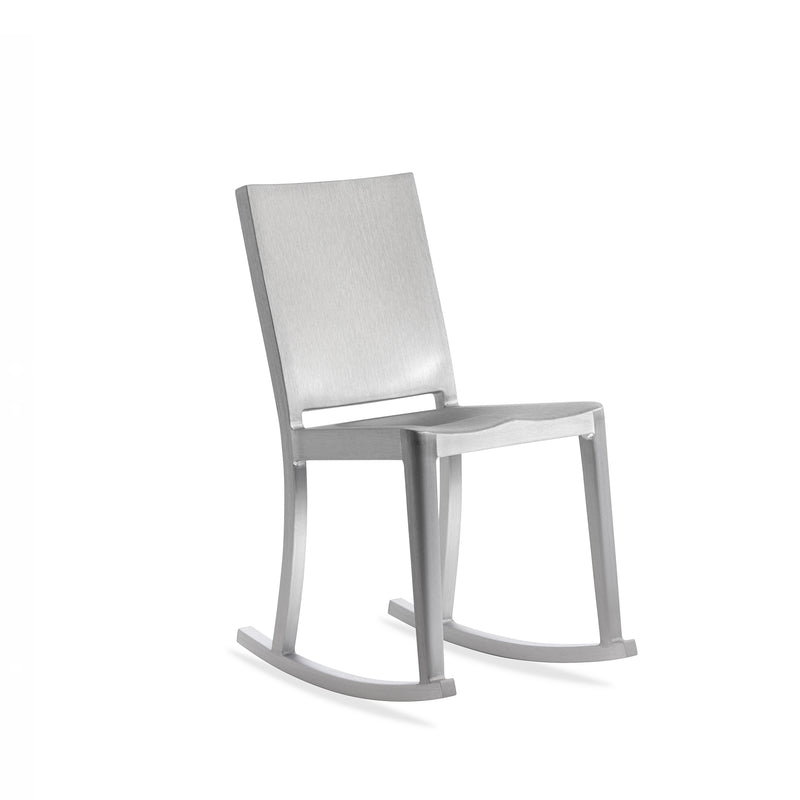
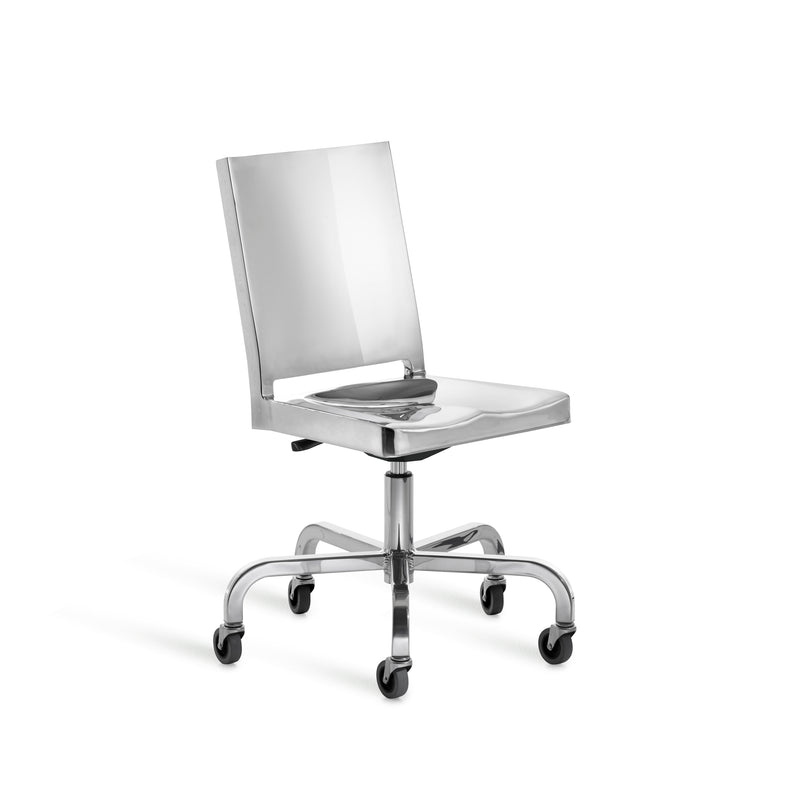
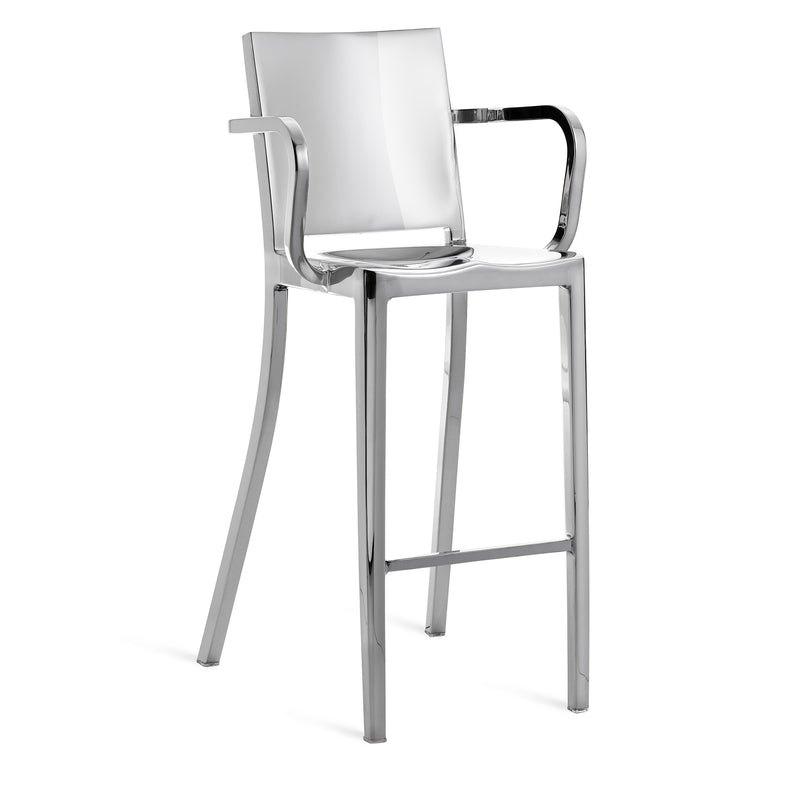
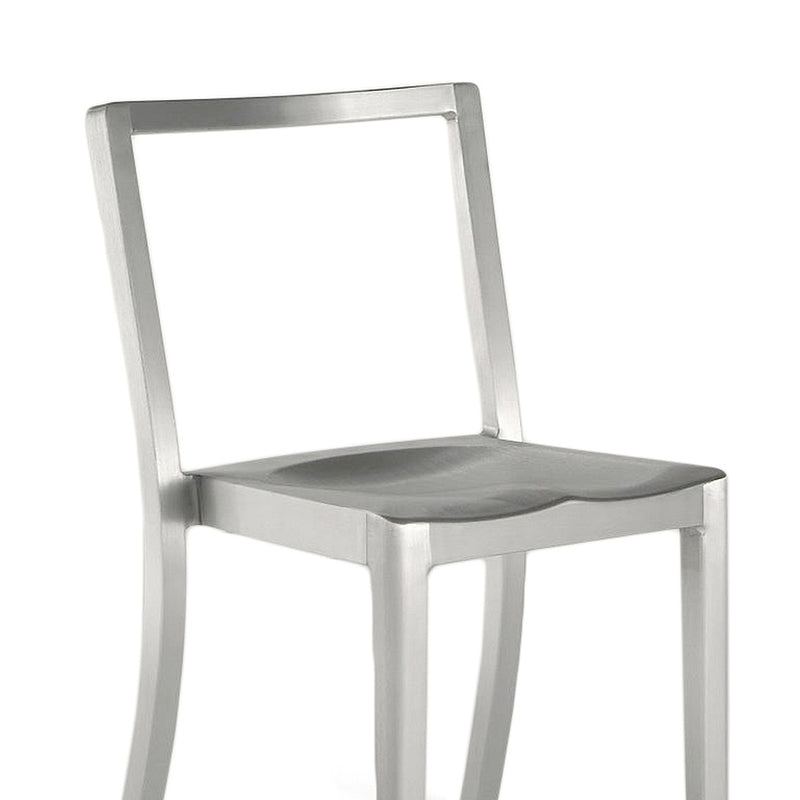
The office is Ian Schrager's warehouse in Soho hidden behind an industrial roll up door, and Philippe Starck has the latest version of the Hudson chair to review. Starck is designing Schrager's Hudson New York Hotel, and wants Emeco to make a guest chair for each of the 1000 hotel rooms. A big deal and a project that confirms Emeco's transformation from a government and military supplier into a design company.
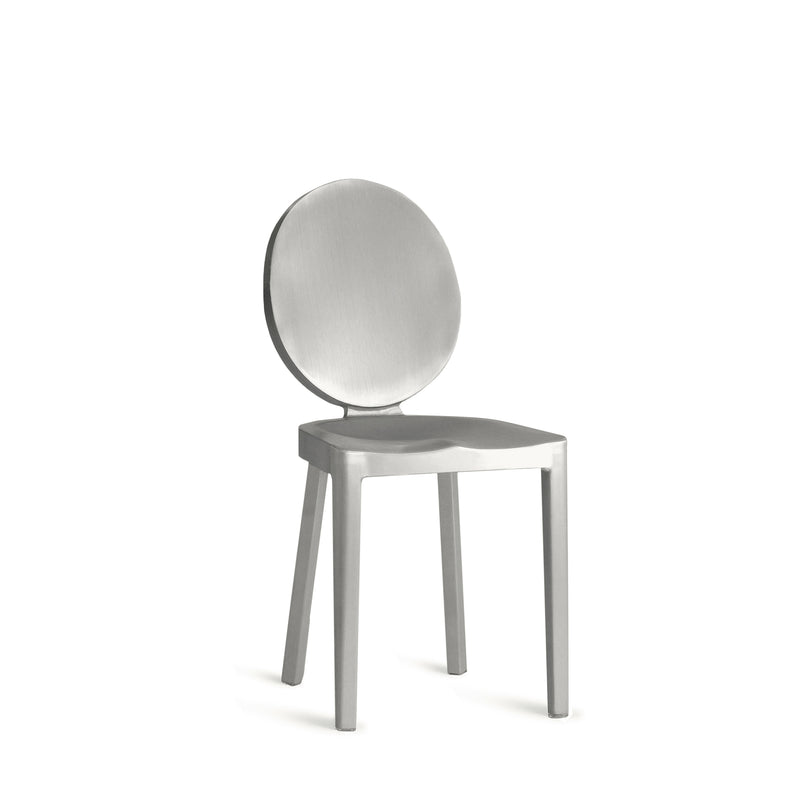
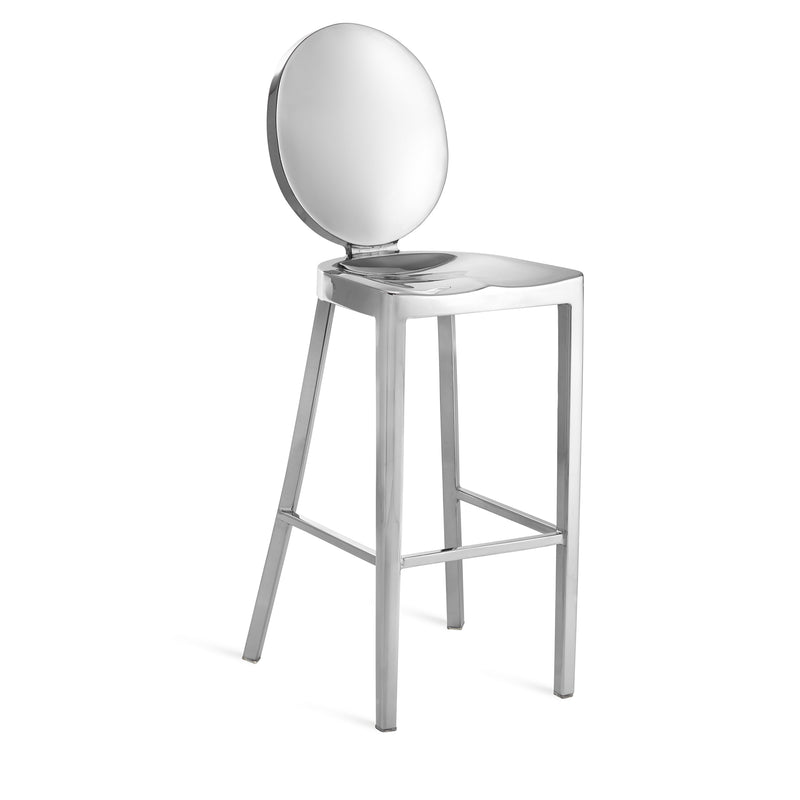
I don't remember the meeting, but in consulting with my dad, this was very early days into the relationship and it was for early prototypes of the Hudson Hotel Chair. All I remember thinking is, yeah I could definitely design a chair. A few months later, and I handed my dad a small cardboard model of a chair (closely resembling the Kong chair) letting him know it would be great if he could pass the model onto Mr. Starck to be used in his latest design. The audacity of an eight year old.
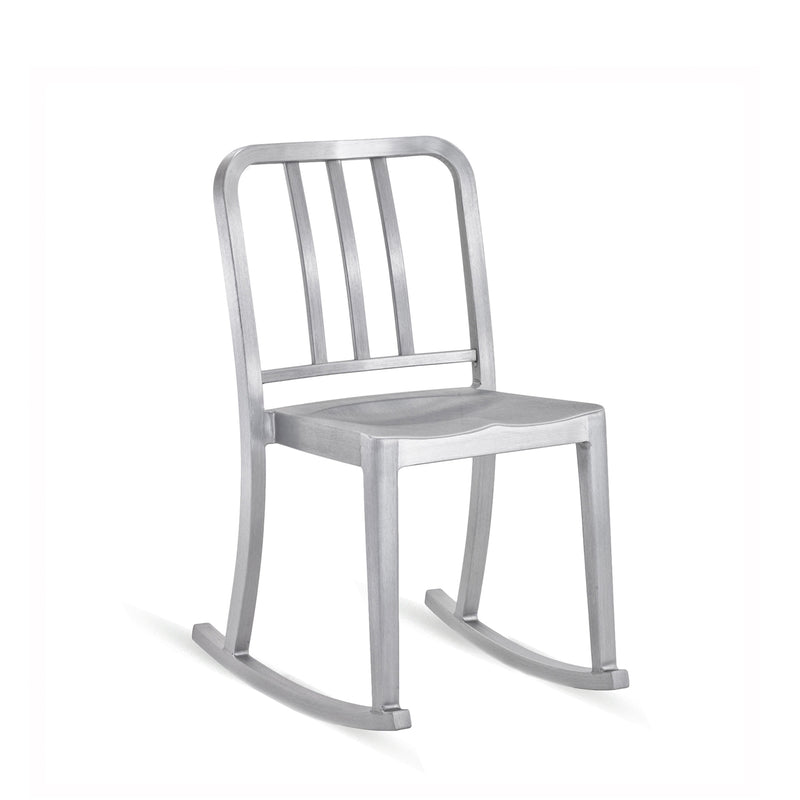
The fateful (and Emeco path changing) collaboration started when Gregg (my dad) had been carrying a Navy Chair around ICFF, absolutely broke, trying to sell the chair by going door to door in New York. He physically bumped into Philippe, who questioned why he was carrying the chair. Once he learned my dad was the new-ish owner of Emeco, he lit up. "You own the company? I thought it was owned by a bunch of old army guys! I'd like to design a chair for Emeco." Amidst a total lack of budget, Starck was off to the races and they met later to begin sketching on the back of a magazine (actually on the back of an ad for a product that Starck had designed). The whole relationship reads so 90's, faxes back and forth, parties, and fedexing chairs around the world. My dad suggested that they could really shit the bed by putting "horns on a Navy chair" and Starck agreed that they would make it work, that he just wanted to "wash it". The relationship started and has always been loving and easy.

Thus began a back and forth of factory-crafted prototypes, shipped to the nearest Fedex. Gregg would pick up the chair, bring it to Starck at whatever cool location he was at, Starck would mock up the prototypes with a Sharpie, Gregg would return to Fedex, repack, and send it back to the factory. Starck could sit on the chair and tell you exactly what needed to change – saying "my ass is a scanner". An innate sense of proportions and ergonomics.
Starck liked to push the boundaries of what Emeco could do – notably saying "If it's difficult, just do it. If it's impossible, I will redesign." This is how the Hudson ended up with a slim reveal at the bottom of the back – the guys at the factory couldn't fit a grinder in if the seat was welded all the way back, a design concession beautifully made.
Philippe also wanted the Hudson really shiny. Emeco had tried different things, but he knew what he wanted and Emeco couldn't accomplish that. My dad became obsessed with polished aluminum. As it turns out, the solution was looking him right in the eyes – the Harley Davidson factory down the street. Gregg walked over with parts and had them teach Emeco's craftsmen how to do it, unveiling it to Starck as a surprise. The verdict: "Shockingly good. Great. I still can’t believe it’s so good." Hand polishing is a skill and craft we've carried with us ever since. It takes us eight hours per chair. Time well spent, if you ask us.

Eventually Hudson was ready, Emeco's first ever designer collaboration. The launch would come to involve showing up outside Milan parties (uninvited) with a traveling billboard, a Conrans party with chairs hanging from the roof, and playing musical chairs in the garden of the Cooper Hewitt. It also brought Starck to the Emeco factory in Hanover, Pennsylvania. He was blown away with the work of the craftsmen at the factory, and had them line up front so he could talk to them. Starck then gave a passionate speech about their sweat, their hearts, their eyes, reminding them they make the most important chair in the world. Years later, one of the craftsmen retired after forty years and was asked about his favorite Emeco memory. He said "When Phil came".

Starck shifted the trajectory of Emeco, and we are forever grateful for the friendship. He understands the importance of craftsmanship, avoiding anything corporate, following your heart and how to have fun.